Expertise · 01
Jaw Surgery &
Facial Asymmetry
Correcting how the jaws fit together — for a better bite, easier breathing and a balanced face.
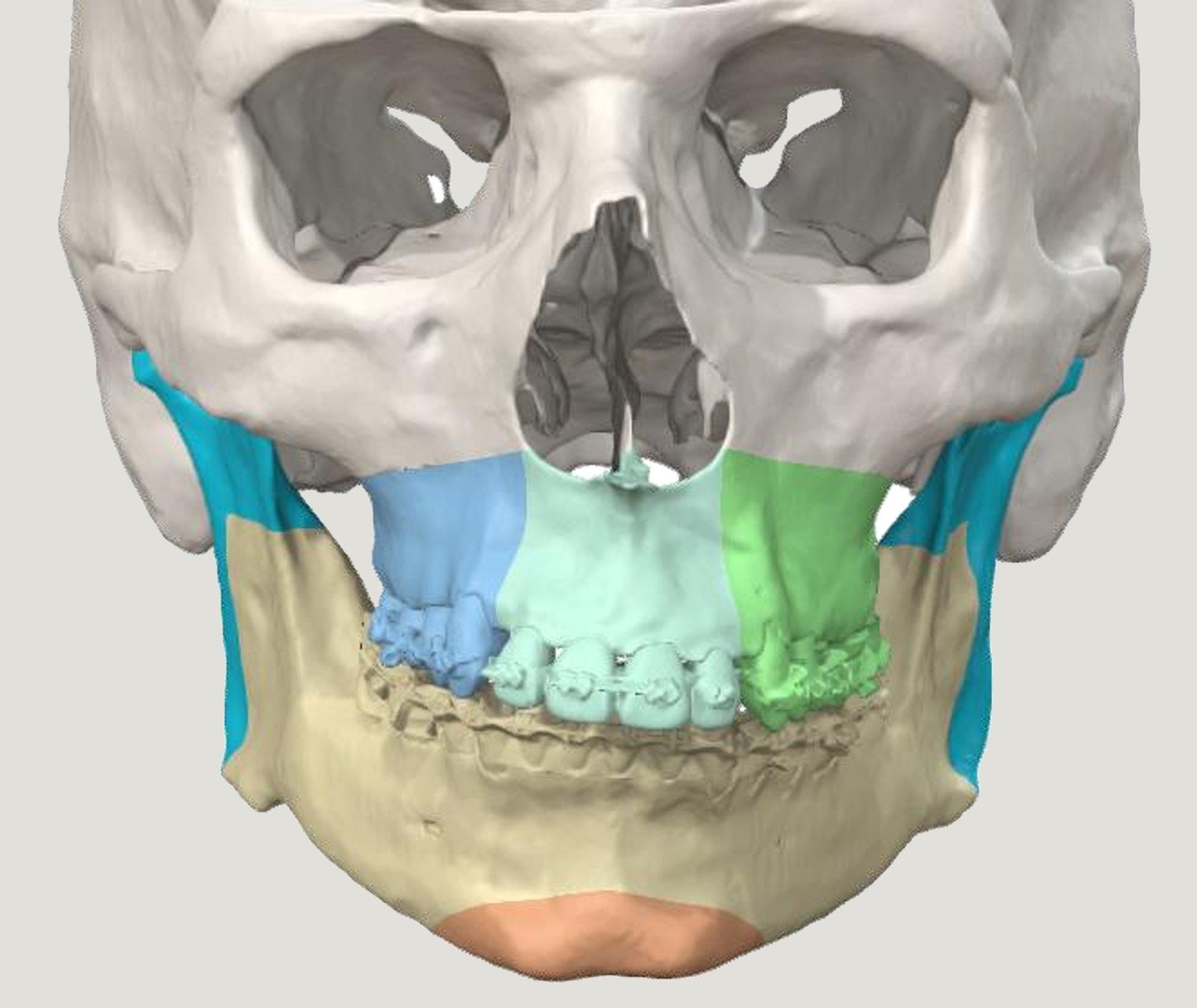
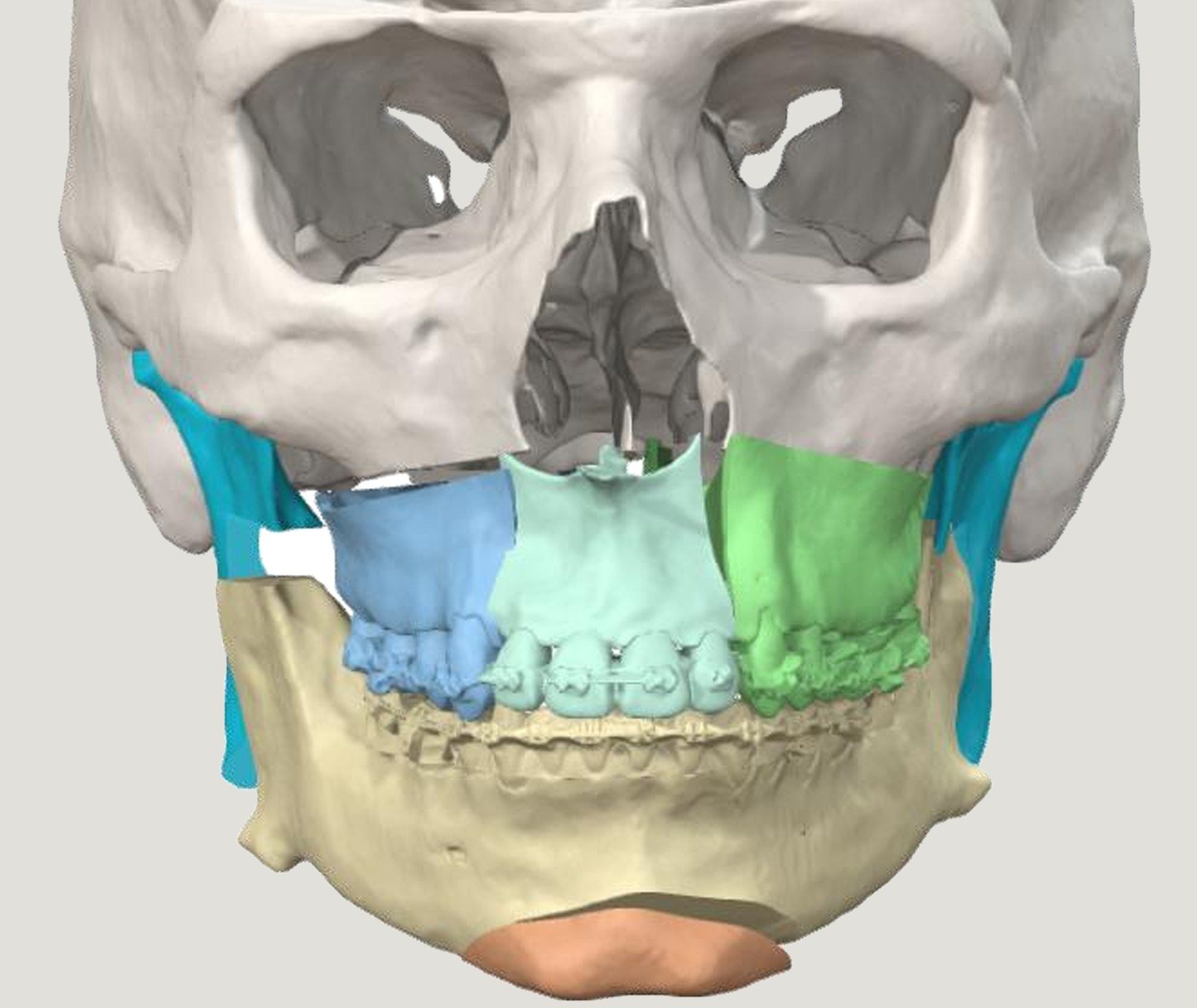
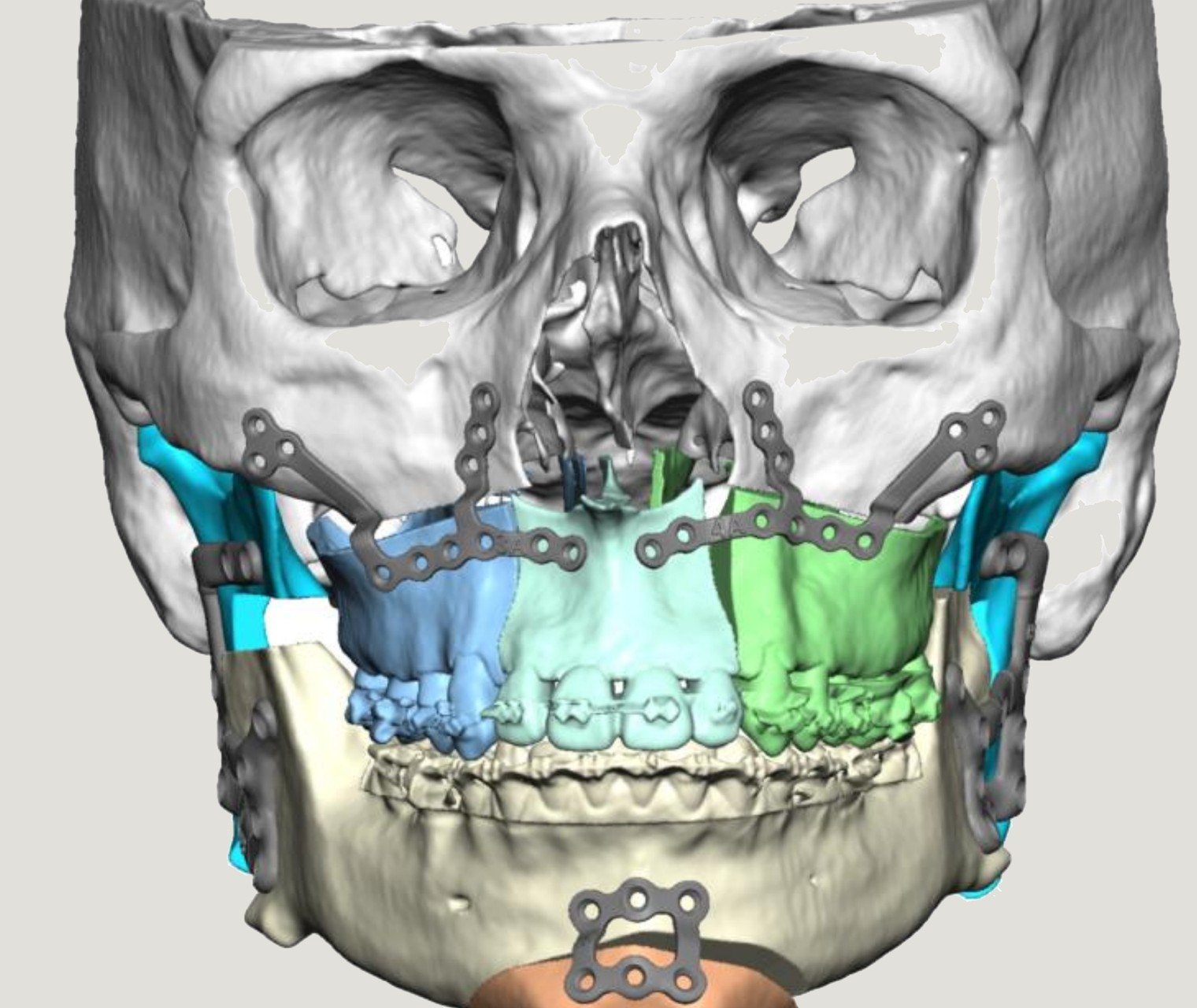
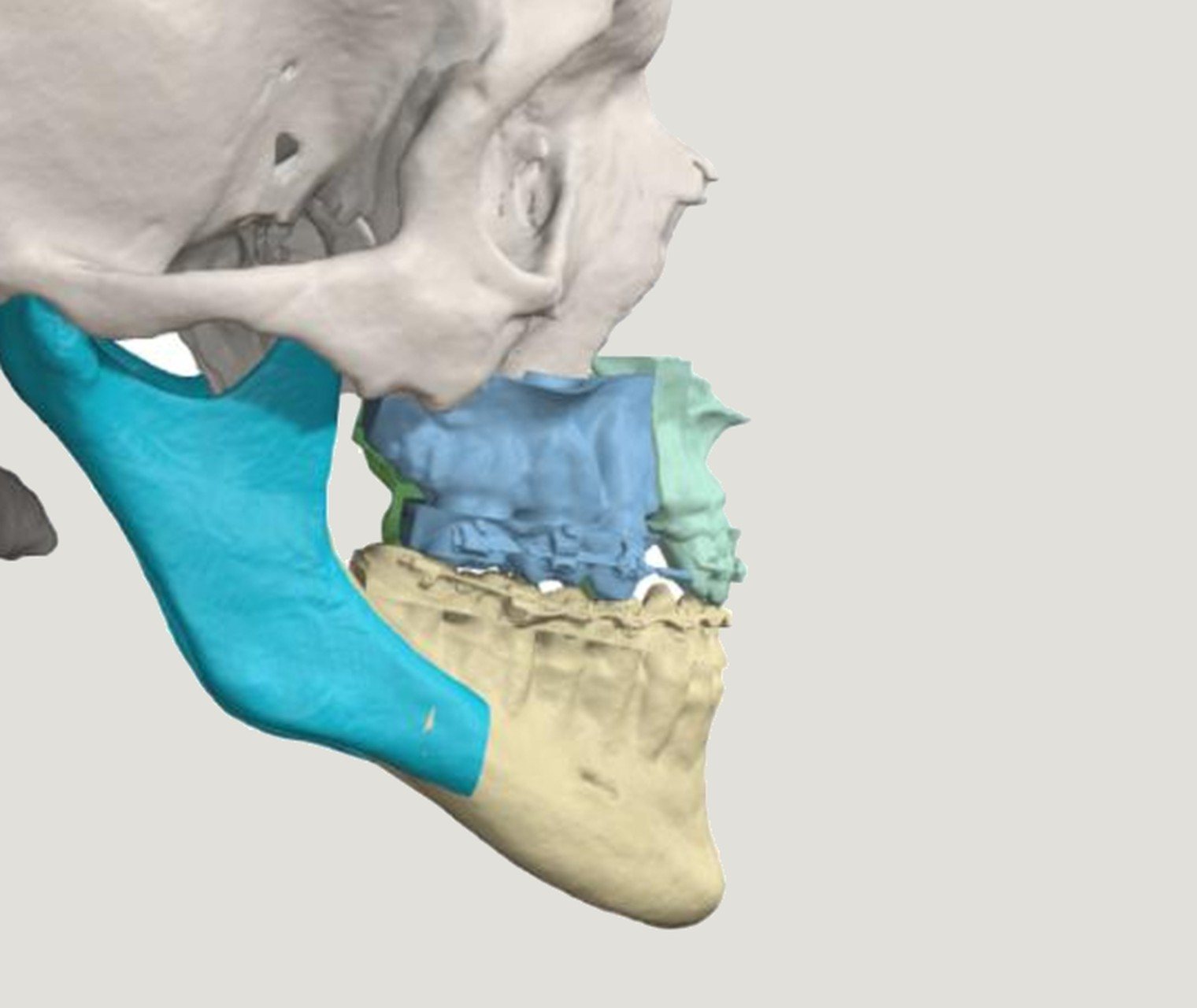
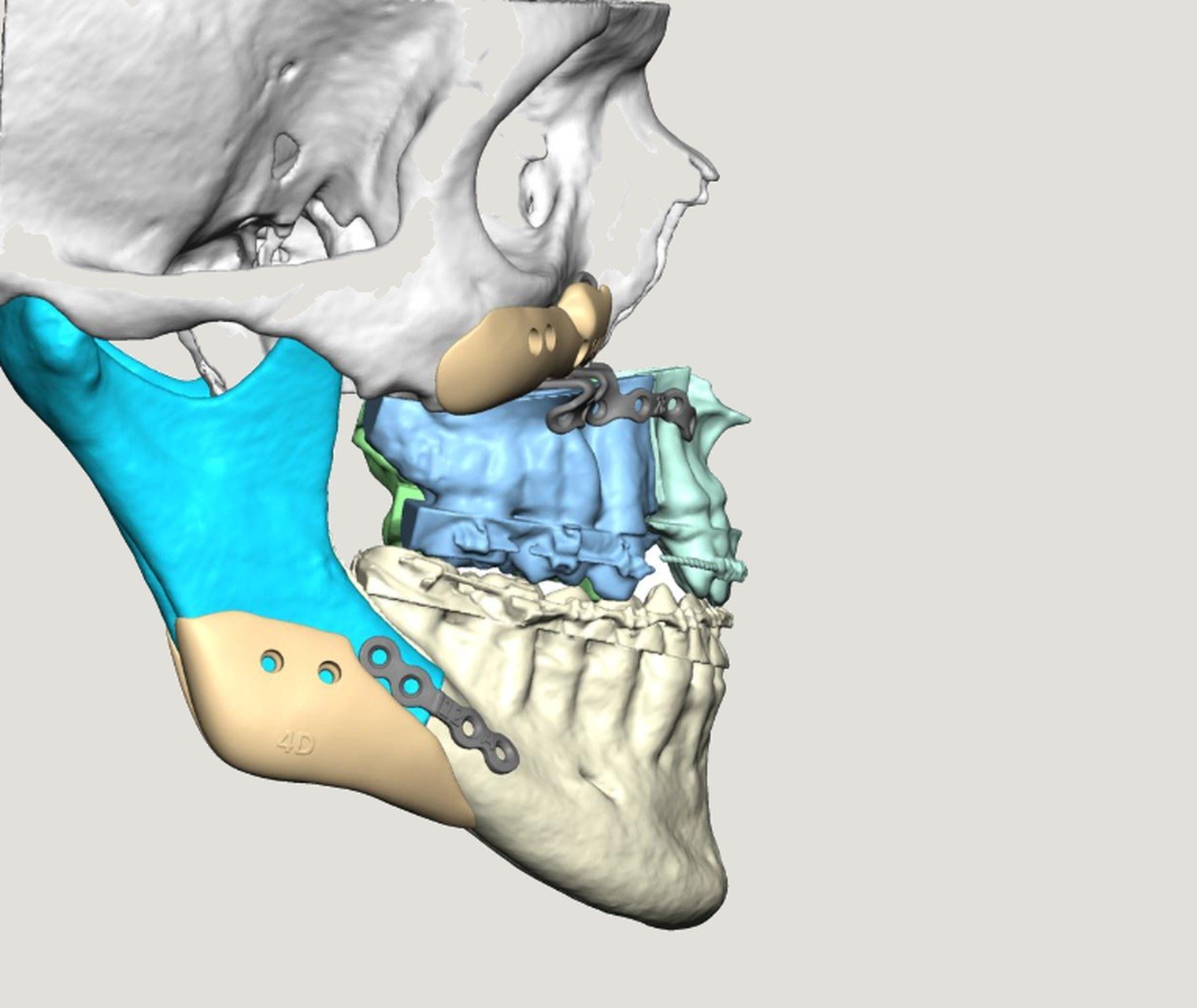
One patient’s virtual surgical plan. Every movement is planned in 3D, and custom plates carry the plan into surgery.
What is corrective
jaw surgery?
Orthognathic surgery — corrective jaw surgery — repositions the upper jaw, the lower jaw, the chin, or a combination, so the teeth meet properly and the face sits in balance.
It is usually coordinated with orthodontic treatment, and planned around your whole face — not the bite alone.
Who it helps
Common reasons patients come in.
- An underbite, overbite or open bite
- A jaw or chin that sits off-center
- Difficulty biting, chewing or speaking
- Breathing problems during sleep
- A face that feels out of proportion
- Concerns after a previous jaw surgery
Focus areas
Complex jaw surgery
Upper jaw, lower jaw and chin surgery — including multi-piece and combined procedures.
Facial asymmetry
Correcting skeletal imbalance so both sides of the face align.
Revision surgery
Careful re-evaluation when a previous surgery didn’t fully meet its goals.
3D surgical planning
Your CT scan becomes a 3D model. Custom guides and plates carry the plan into surgery.
Case example
Beyond the jaws.
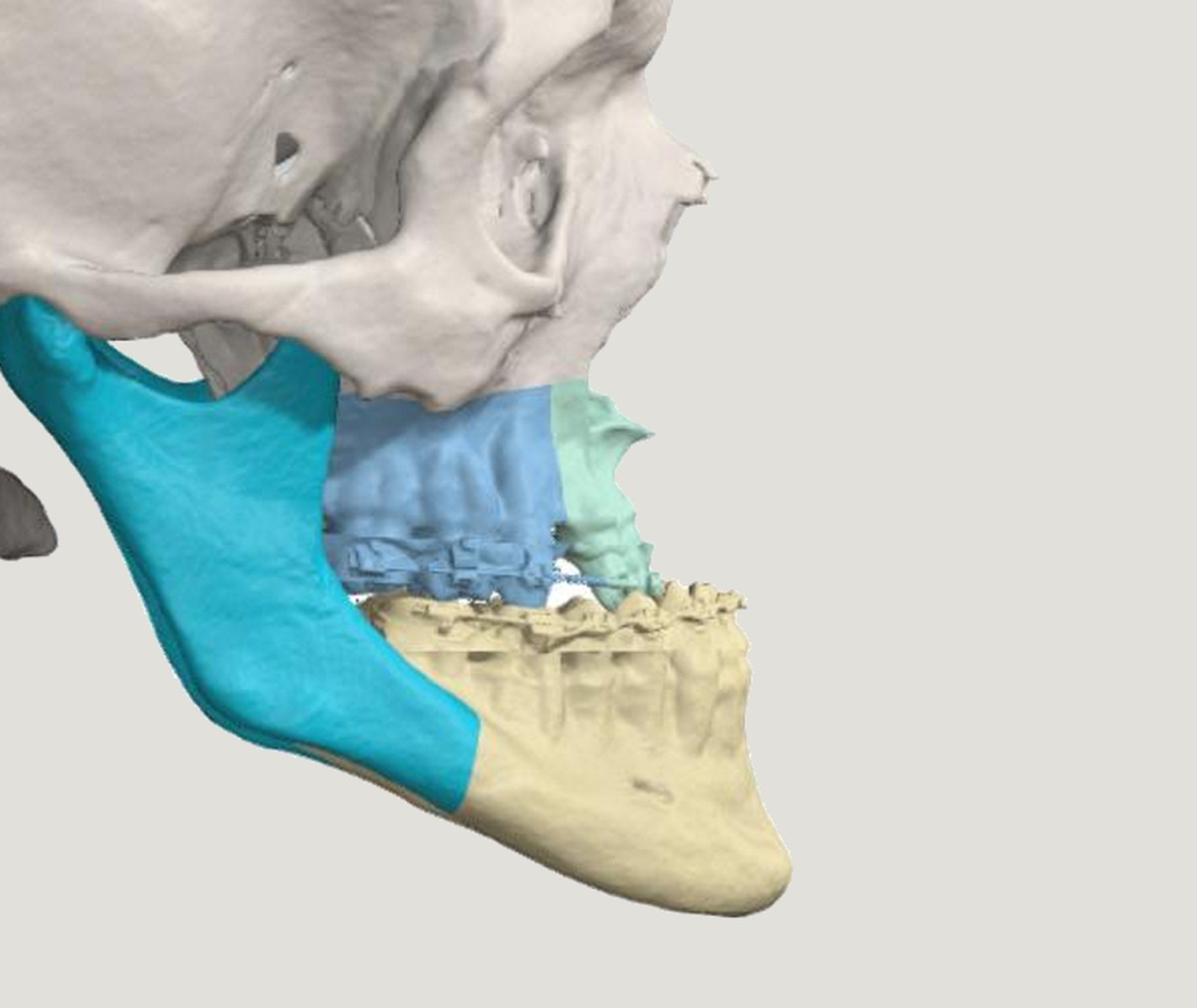
Both jaws repositioned, then custom implants to complete the facial contour — all in one plan.
Minimally invasive orthognathic surgery
Less invasive,
when it’s right.
For selected patients, jaw surgery can be performed through smaller incisions with more limited exposure — aiming to reduce surgical disruption while still carrying out the full plan.
Whether it suits you depends on your anatomy and the movements needed. It’s discussed during planning — never assumed.
The process
What to expect.
- i.
Consultation
Your goals, an exam of the whole face, and records.
- ii.
Orthodontics
Usually needed to prepare the teeth, coordinated with your orthodontist.
- iii.
3D planning
Surgery is rehearsed virtually; guides and plates are made for you.
- iv.
Surgery
The plan, carried out precisely.
- v.
Recovery
Close follow-up as swelling settles and the bite is finalized.