Expertise · 02
TMJ Surgery &
Joint Replacement
Surgical care for complex jaw-joint problems — up to and including total joint replacement.
The joint that
moves the jaw.
The temporomandibular joints (TMJs) connect the lower jaw to the skull, just in front of each ear.
When a joint is damaged or malformed, it can cause pain, limited opening, a changing bite — or a gradual shift in the shape of the face.
Conditions treated
Complex TMJ disorders
Joint problems that haven’t responded to other care.
Arthritis & degeneration
Wear and breakdown of the joint surfaces.
Structural abnormalities
Joints that are malformed, fused or have lost bone.
Joint + jaw problems
When the joint and jaw position are affected together.
Most jaw-joint symptoms don’t need surgery. Surgery is considered when the joint itself is structurally damaged — or when other treatments haven’t helped.
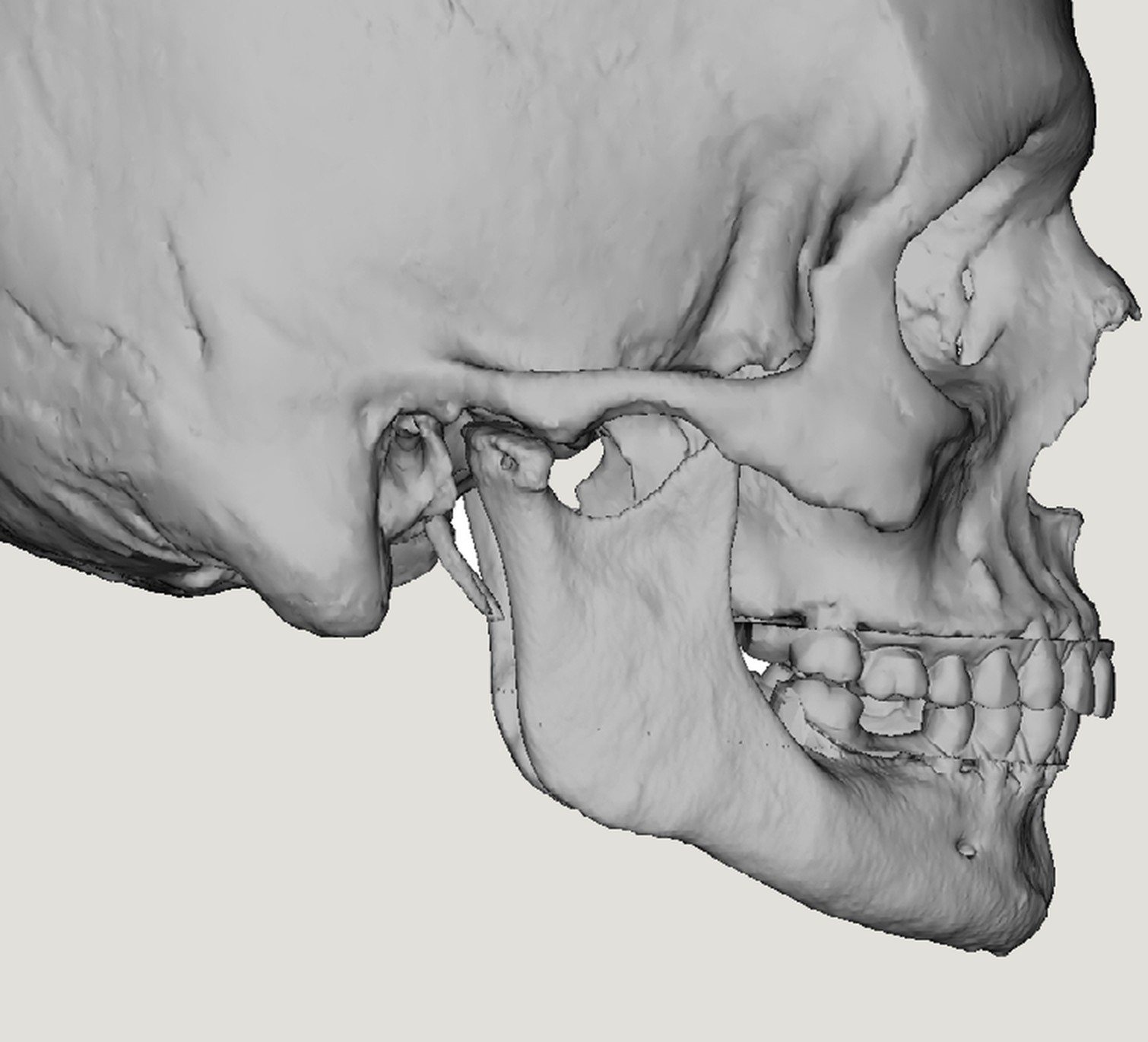
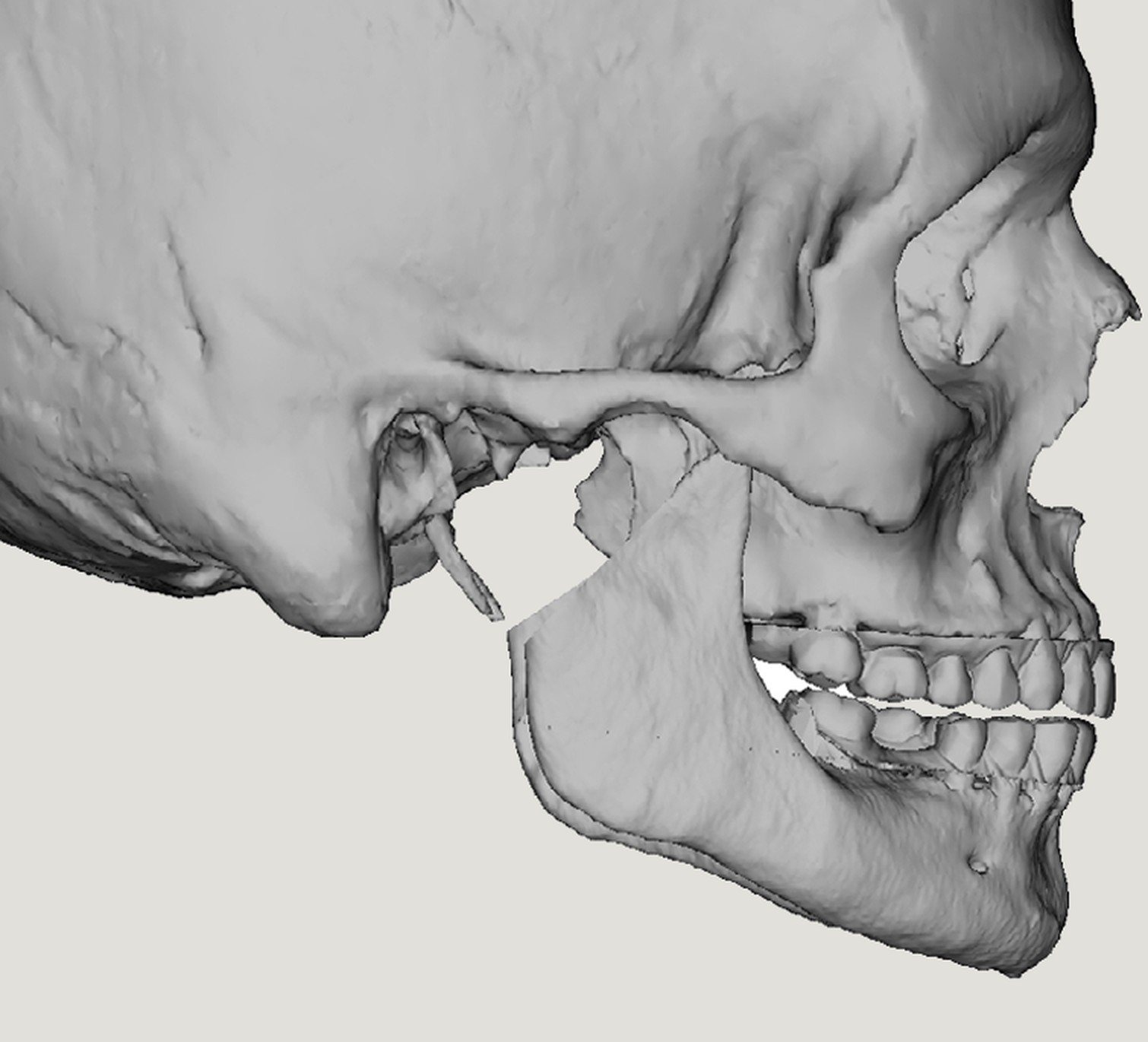
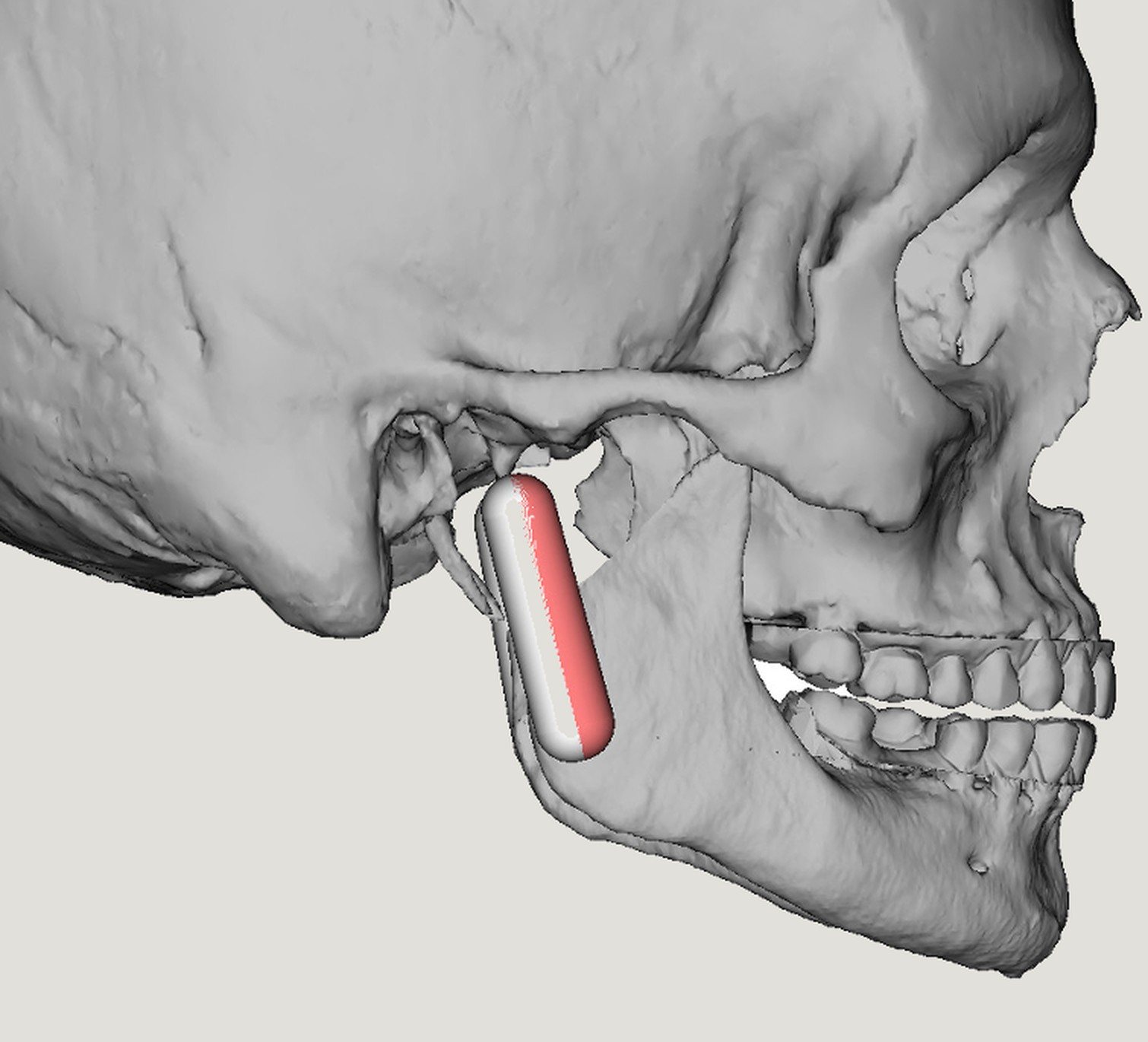
Case example · Virtual surgical plan
Joint and jaw, planned together.
The damaged joint is removed, the jaw is brought into its corrected position, and a custom joint is designed to hold it there.
Total joint replacement
A new joint,
built for you.
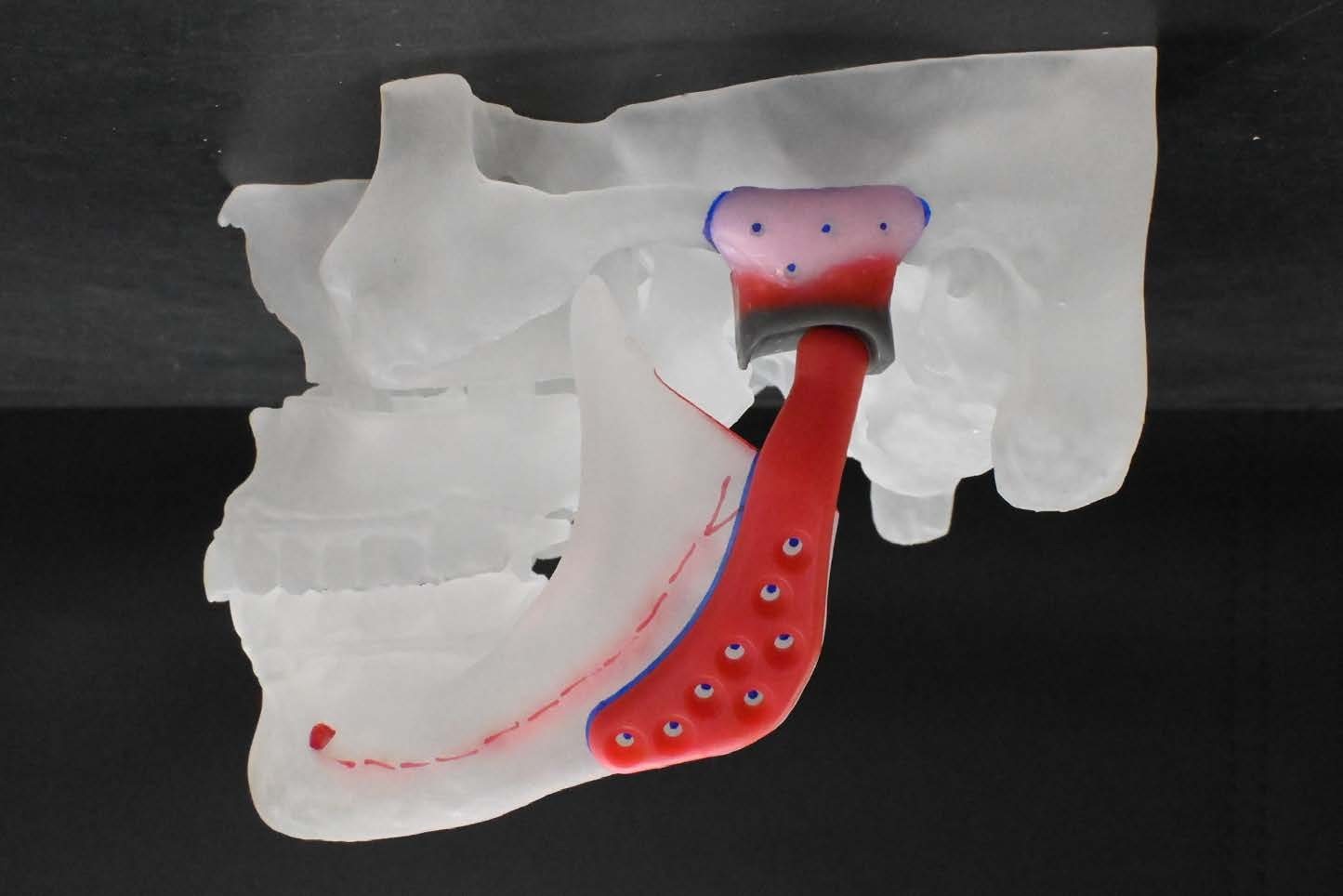
When a joint is too damaged to repair, it can be replaced. The joint is reconstructed with a prosthesis — often custom-made from your CT scan — to restore function and support the jaw’s position.
If jaw position also needs correcting, joint replacement and corrective jaw surgery can be planned together in 3D.
The process
- i.
Evaluation
Symptoms, jaw function and 3D imaging of both joints.
- ii.
Options
The least invasive approach that will reliably work.
- iii.
Planning
Joint and jaw considered together, planned in 3D.
- iv.
Recovery
Guided physical therapy and close follow-up.